NCQA Fireside Chat: Nevada’s Approach to Sustainable, People-Centered Health Policy
June 16, 2026 · NCQA Public Policy
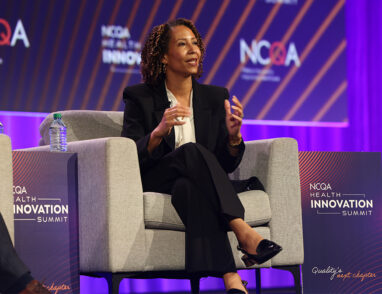
In a recent NCQA Fireside Chat, Nevada Assemblywoman Tracy Brown-May shared a glimpse into the challenges and opportunities shaping healthcare in her state. Drawing on her experience as both a legislator and nonprofit leader, our conversation touched on what it takes to build a health system that works for everyone—especially the people who are often left behind. Across issues like rural access, disability inclusion, data fragmentation and cross-government collaboration, a consistent theme emerged: lasting progress requires practical, people-centered solutions.
Read on for key insights from the discussion.
Rural Health Access Remains the Defining Challenge
In Nevada, geography is more than a backdrop—it shapes access to care. Communities are spread across vast, sparsely populated areas and infrastructure gaps create significant barriers.
The state’s 14 rural hospitals span 16 counties, with many designated as critical access facilities. Some communities are so remote that patients rely on helicopter transport. These challenges reflect more than distance; they point to a system not designed to meet rural needs.
That is something Assemblywoman Brown-May is hoping to change.
Nevada’s Rural Health Transformation effort emphasizes flexibility. The state is organizing investments across four areas: flexible infrastructure, workforce development, rural health outcomes and innovation and technology. But rather than dictating solutions from the top down, the state is engaging providers across the care continuum—hospitals, clinics, dentists and behavioral health organizations—to identify what their communities need most.
Brown-May also emphasized that Nevada is prioritizing investments that create lasting infrastructure and sustainable solutions, not short-term fixes.
Disability Inclusion Improves Health Systems for Everyone
Disability inclusion is a core focus of Brown-May’s work, with implications far beyond any single population. About one in four Americans has a disability, yet health systems still often overlook accessibility, communication needs and individualized care.
Brown-May underscored a key principle: when systems are designed for people with disabilities, they work better for everyone. From curb cuts that support both wheelchair users and families with strollers, to digital tools that enhance communication and independence, accessibility innovations ultimately become universal improvements.
Equally important is reframing how disability is understood in policy. “When you’ve met one person with a disability, you’ve met one person,” she said, stressing the importance of flexible, person-centered approaches rather than one-size-fits-all solutions.
Interoperability: Connected Data Enables Better Care
Like many states, Nevada is still working toward a fully integrated health information exchange. Today, health data often resides in disconnected systems, leaving patients and providers to fill in the gaps.
Brown‑May shared a personal story in which, after receiving emergency care while traveling in state, her follow-up provider could not access her test results. Without her manual intervention, the system would have duplicated tests, resulting in increased costs and delayed care.
The assemblywoman stressed that this is not an isolated experience—it is a systemic issue. Without interoperability, care is less efficient, more costly and patients bear the burden of coordination. At the same time, expanding data sharing requires careful consideration of trust, governance and privacy protections.
Sustainable Health Transformation Requires Strong Collaboration Across Government
Sustained health system change depends on strong partnerships and shared accountability across government. As Brown-May noted, improving care requires alignment among policymakers, state agencies, providers and communities.
In Nevada, collaboration is taking shape through coordination between the legislature, Medicaid and the state’s new Health Authority. Importantly, this work also extends beyond political lines.
Brown‑May’s parting message emphasized that effective policy centers on serving people. “We’re all on the same team… we’re all working to build a policy that affects everyone.”
NCQA thanks Assemblywoman Tracy Brown-May for sharing her time and thoughtful insights with our audience.
Visit our video gallery to watch the full Fireside Chat recording.