CMS Vision for Quality and Access: Moving From Measurement to Better Outcomes
October 7, 2026 · NCQA Communications
The healthcare industry has spent decades building quality programs, performance measures and accountability systems to improve care. But as the quality ecosystem has matured, a new question has emerged: Are those efforts translating into better patient outcomes?
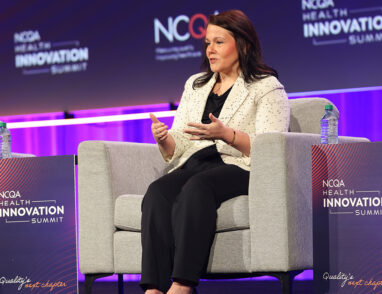
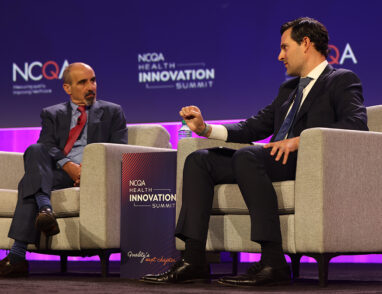
That question framed a fireside conversation between Dr. Vivek Garg, President and CEO of NCQA, and Dr. Dora Hughes, Chief Medical Officer and Director of the Center for Clinical Standards and Quality (CCSQ) at the Centers for Medicare & Medicaid Services (CMS), at NCQA’s Health Innovation Summit. Drawing on her experience as both physician and patient, Dr. Hughes reflected on the evolution of quality measurement, CMS’s efforts to reduce burden and align programs and the agency’s vision for using technology, data and patient insights to improve care.
Key Takeaways From This Session
A Personal Commitment to Better Care
For Dr. Hughes, the work is deeply personal. During her internal medicine residency at Brigham and Women’s Hospital, she was diagnosed with multiple sclerosis, an experience that exposed her to both the strengths and shortcomings of the healthcare system and ultimately inspired her career in health policy and public service.
“Starting with that experience early in my career sparked my interest in policy and what ultimately led me into federal government,” Dr. Hughes shared.
Turning an Extensive Quality Infrastructure Into Action
CMS oversees a vast quality enterprise, including 27 quality reporting and value-based payment programs and nearly 500 quality measures. Yet Dr. Hughes argued that the next challenge is turning measurement into meaningful improvement.
“We have had success in creating the measures,” Dr. Hughes said. “But where we realize that we have fallen short is translating this understanding of variation in performance to learning from that, to moving to action and then to reaching the holy grail…better outcomes for our patients and our residents.”
The next chapter, she explained, shifts from quality measurement to quality management, with a focus on helping people live healthier, more independent lives and achieve outcomes that matter to them.
Keeping Beneficiaries at the Center
Some of CMS’s most valuable quality signals come directly from patients and families. Through its beneficiary complaint, appeal and grievance processes, CMS receives more than 800,000 concerns annually, offering a unique view into the patient experience.
“It very much helps to anchor our commitment…to continue to keep the beneficiaries and both patients and residents at the center of everything that we do,” Dr. Hughes said.
Dr. Hughes highlighted AI’s potential to help CMS move from reacting to problems after they occur to identifying risks earlier, allowing the agency to target support and interventions before issues escalate.
Refocusing on What Measures Matter Most
Over the past five years, CMS has reduced its measure inventory from roughly 750 measures to about 490. Dr. Hughes emphasized that the goal is not fewer measures for the sake of fewer measures, but a smaller, more meaningful set that informs decisions and drives improvement.
“Which measures are providing information that can’t be acted upon?” she asked. “It’s not changing a decision. It’s not improving how we deliver care.”
CMS is also seeking a better balance between process and outcome measures. While process measures remain important, Dr. Hughes stressed the need to keep quality efforts focused on whether patients are getting healthier. Dr. Garg echoed that perspective, noting patient-reported outcomes as an important tool for measuring the impact of care.
Alignment and Technology as Enablers
CMS is continuing efforts to align measures across Medicare, Medicaid, Marketplace and Innovation Center programs through the Universal Foundation. Dr. Hughes acknowledged that alignment becomes more complex in implementation than it appears in policy, making stakeholder feedback essential.
“We know that we can’t be successful without having your partnership, your experience, expertise, all of that on board,” she said.
Technology is another key enabler of CMS’s vision. Through initiatives such as QualTech and the broader Health Tech Ecosystem, the agency is exploring ways to reduce burden, improve interoperability and make quality measurement a byproduct of care delivery rather than a separate administrative task. Still, Dr. Hughes cautioned that innovation cannot replace the fundamentals of safe, reliable care.
A Vision for the Next Five Years
Looking ahead, Dr. Hughes described a future in which health data moves seamlessly with patients across care settings, quality and safety information is more transparent and providers can use the same data to deliver care, improve performance and support quality reporting. Greater measure alignment, combined with a National Quality Dashboard, could help healthcare organizations focus their efforts where they can have the greatest impact: improving outcomes.
Realizing that vision will require collaboration among CMS, states, health plans, providers, technology partners, quality organizations and patients.
Dr. Hughes left the audience with a clear message: the future of quality will be defined not by how much the healthcare system measures, but by how effectively it uses those measures, technologies and partnerships to improve people’s lives.
Learn More
We will post more insights from the Health Innovation Summit on our blog, so stay tuned.