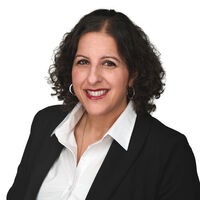
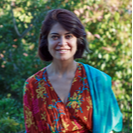
good afternoon, everyone. We'll just give it another minute for everyone to join. I know we are all excited for this webinar today, and we're excited to host an an amazing group at the Institute of Aging. So we'll give it another minute. Perfect. Well, again, welcome everybody. I am Ryan, and I'm hosting this webinar today. I'm a director of business development here at NCQA, and I'm really excited to host this where we're gonna be talking about care transitions, community partnerships, and what it really takes to improve outcomes for older adults and adults with disabilities. So the Institute of Aging for more than forty years has helped older adults and adults with disabilities live with dignity, independence, and connection in a place they call home. They serve as the essential partner in the continuum of care, bringing together health services, social programs, caregiver, and emotional support, dementia care, and advocacy, all delivered through one coordinated experience for every client and family. Some of their flagship programs are their twenty four seven Friendship Line, the nation's only accredited Crisis and Warm Line for older adults. Companion Dementia Services, which is a personalized support for individuals and caregivers navigating cognitive decline. In home care, tailored assistance that supports safety, independence, and daily living, enhanced care management for Medi Cal members, whole person care coordination, and, of course, their PACE, which is program of all inclusive care for elderly, a joint program providing comprehensive medical and social services. They touch nearly sixty seven thousand Californians every year along with their family, caregivers, and circle of care. Their footprint continues to grow across counties statewide, expanding access to community based support. At the heart of their work is a deeply personalized philosophy that every client has a unique story and every family has a unique set of needs. They build care plans that honor who people are, where they come from, and how they want to live. So I'm really excited to present our two presenters. So we'll start with doctor Kristen Azar. So doctor Azar brings more than sixteen years of experience at Sutter Health where she co designed, launched, and served as the inaugural executive of the Institute for Advancing Health Equity within the quality and patient safety division. Under her leadership, the Institute for Advancing Health Equity grew into a system wide program that improved patient experience, reduced disparities, and embedded equity into organizational frameworks, and she is vice president of quality and performance excellence at the Institute of Aging. Our other guest, Nancy Pedersen, is senior director of care management programs, and Nancy has worked in the field of mental health and social services for over fifteen years with experience offering direct services, providing clinical supervision and providing consultation. In her role at the Institute of Aging, she has supported the implementation of several LTSS programs, working closely with stakeholders and health care systems and the local and state level. She is currently on the steering committee of the Medi Cal CBOs Coalition Advancing for Community Based Providers that Offer Cal Aim Services. So welcome, Doctor. Azar and Nancy. We're really excited to learn all about your intentional work, so I'm going to hand it over to you all. Thank you so much, Ryan. Bear with me here as I share my screen in our presentation. Okay. Go. Great. So great to be here with you all. So thank you so much for joining us today. On behalf of our entire team, thank you for to NCQA for the opportunity to share this work. It's truly a privilege to be part of this conversation on building better care transitions. I'm Kristen Azar. As Ryan mentioned, I'm a nurse scientist, and I serve as a VP of quality and performance excellence at the Institute on Aging. I'm joined today by my colleague Nancy, a licensed clinical counselor and senior director of our care management programs at IOA. Before we begin, we want to take a moment to thank the many people who make this work possible every single day. This includes our partners at San Francisco Health Plan, our hospital partners, and especially the care managers, social workers, and community teams who sit at the bedside and walk alongside our clients long after discharge. Nothing we will show you today would be possible without them. Over the next forty five minutes, we'll walk you through a practical model for improving care coordination, equity, and outcomes during one the most challenging and stressful moments in healthcare, the transition from hospital hospital stay back to home and community. Here's an overview of what we plan to share with you today. We'll open with a short client story to ground us in the human experience, then look at why care transitions fail so often and how our acute care transitions or ACT model for enhanced care management operates to address and overcome some of those challenges. Nancy will then share the model in more detail as well as share more about our one year pilot, which we're just wrapping up. She'll also share about how we partnered and what the early data show, and then I'll return to walk through our evaluation approach. This will be followed by Nancy ending with practical takeaways and resources for organizations that may want to replicate this model in their own communities. We'll leave time for questions at the end. So please, jot those down as we go, and we're excited to move along here. We always like to start with centering the client voice. As I'm sure many of you are aware, recovery doesn't just happen in the hospital. It primarily happens in the community, in someone's home and in their daily life. So this short video follows one client's journey from a hospital bedside to stable community living. And as you watch, please notice the handoffs, the relationships, and the social supports needed to make that transition actually work. From the very first moment that I set foot in San Francisco, I felt like I'm blown. I come from a small town and I'm sitting here a punk rock kid walking down the hallways being spit on by other students. And it was because I was different and I was weird and I was in a small town where weird does not work. And then I came to San Francisco. I saw more people like me and I was normal. Nobody thinks they're gonna get old, but they do. And, you don't know how you're gonna do it. You don't know how you're gonna be old. Didn't think it was gonna be like this. Before COVID, I was sober for two years, and then COVID hit. And that's when I lost all my AA meetings. That's when I lost my sponsor. I started drinking again, and it was just enough for my liver to say, sorry. I can't bounce back this time. So I needed a new one. So I was in a hospital bed for the fifth time that year. I was really struggling with the fact that my mother who's retired was taking care of me with my rent and food, and she's using her retirement when she doesn't have enough for that to help me. It was it was a horrible feeling. My mother is the most amazing person in the world, but I don't want her life being worse because of mine. The phone on the hospital bed rang and I answered it and it was IOA. And I was like, hello? And they were like, do you need help? So so I said, yeah, could use help with food and I could use help with rent. And they were like, well, let's make an appointment. Let's let's meet and we'll see what we can do for you. John. Hey. How are you doing? Oh my god, John. How are you doing? I'm Frey. I'm a care manager. I work for IOA. I met John a year and a half ago, but he was in a really bad place. John is a great example that he did not have any clue which way to go, how to access any resources. You had all this information, but you weren't like shoving it on me. You know, I wanted to get to know you. When I did the assessment, I wasn't rushing because I wanna get to know John. We would talk about certain things that I might need or whatnot, but we would also just say, hey. How are you doing? What you've been through and then where you are right now is amazing. It it just gives me so much joy, like, to to see that, like, you know, it's a partnership. We did it together. Not everybody knows everything, and you need somebody who can help you. IOA was there to fill the gap. It was enough to for me to be able to worry about my medical problems and not so much, will I have a roof when I get out of the hospital this time? July thirteenth will be a year since my surgery. Some amazing person was a donor. There's only one reason right now that I can see of why I'm still here, and that is the Iowa. I get to stay in San Francisco because of Iowa. I get to live in the house that I've lived in since I was twenty eight years old. If it wasn't for what I received from the program, I wouldn't be able to be in the place that made me feel like I belonged. Iowa has this ability to just come into a person's life and change it for the better. So what you just saw was not unusual for the people that we serve. The clinical event that brings someone to the hospital is often the smallest part of what stands between them and stability. Please keep in mind that as we look at the broader needs, that these all these numbers all have stories behind them and people, and really centering those voices is really important as we continue on and do this work. So transitions between care settings among the most are among the most challenging moments in health care. Statewide, all cause unplanned thirty day readmissions in California hospitals generally hover around fourteen percent. For Medi Cal specifically, data from the Department of Health Care Access and Information or HCAI indicates that readmission rates often exceed the state's healthy target of twelve percent. Further, about twenty percent of all Medicare discharges result in a thirty day readmission, costing the system more than seventeen billion dollars every year. For adults with complex medical, behavioral, and social needs, recovery hinges on whole person factors. These are commonly referred to as the social drivers of health and include housing, nutrition, and access to primary and specialty care. Those needs unfold in the community and at home, and they follow individuals into clinical settings and exam rooms. Without intentional community anchored transitions and a broader definition of what the care team means and who it includes, people remain vulnerable to instability, worse outcomes, and avoidable readmissions, and the people most affected are those already experiencing health inequities and disparities. Closing that gap is exactly what the ACT model is intended to do. So what is Institute on Aging and why is IOA, as we say for short, so well positioned to do this work? Well, let me introduce the organization and the California statewide benefit that makes this possible. At IOA, our mission is to enhance the quality of life for adults as they age by enabling them to maintain their health while being an independence and participation in the community. Institute on Aging is a nonprofit that has served older adults and adults with disabilities for more than four decades. Forty years ago, a group of physicians identified the need to develop programs aimed at supporting older adults in the communities where they live to allow them to age in place in their homes, preventing unnecessary institutionalization within a care facility. This work laid the foundation for what is now IOA, and IOA provides a wide variety of healthcare adjacent programs aimed at supporting older adults and adults with disabilities and has evolved to also support adults as they age earlier on in the aging process. There are five different core services, one of them being care management services. IOA is one of California's largest providers of CalAIM enhanced care management, or UCM, and we have over twenty years of experience delivering transitional care and community based care for individuals with complex care needs. Actually, IOA established the San Francisco based Community Living Fund and the CLF model in partnership with the city and county of San Francisco in two thousand and seven. And this CLF model was one of the primary models that inspired and informed the CalAIM enhanced care management model that I will share more about in a minute. Through multidisciplinary teams of care managers, we continue to help members navigate health care, social services, housing, and community resources across fifteen California counties with the goal of improving both health outcomes and quality of life. Our work is grounded in our values shown here and in the belief that everyone deserves to age and recover with dignity in the setting they consider to be home. Especially relevant to this work is our commitment to innovation as one of our institutional values. As an institute, learning, improving care for our communities and sharing what we learn are more broadly are part of our identity. And all of this is what led us to seek partnership enabling us to extend care management directly into hospitals and acute care settings, allowing us to meet people at the bedside at the moment of their greatest vulnerability and need rather than waiting for them to find us after their discharge. So let me briefly define the benefit at the center of this work. California Advancing and Innovating Medi Cal, or Cal AIM, is a far reaching multiyear initiative launched January twenty twenty two by the California Department of Health Care Services. It aims to transform the state's Medicaid program known as Medi Cal by integrating physical, behavioral, and social services to support the most vulnerable populations, such as those with complex medical needs, those experiencing housing insecurity and homelessness, or individuals leaving the justice system. Enhanced Care Management, or UCM, is a statewide Medi Cal benefit that delivers highly coordinated person centered care for members with the most complex medical needs and social needs, as I described just a minute ago. And this work was specifically designed to decrease health disparities in outcomes, as well as address inequities in access to care. The model has three foundational features. First, every member has a single dedicated care manager, one person who is their main point of contact across every service. Second, it's a whole person approach. So, one team helps navigate the constellation of needs for an individual, from their medical needs to their behavioral health needs to dental and social needs, housing and transportation. Third, support is delivered in person whenever possible and wherever the member is most comfortable, so whether at home or at the doctor's office or somewhere in the community. ECM is voluntary and offered at no cost to eligible Medi Cal members in specific populations of focus. There are eleven populations of focus for children, youth and adults and our services at IOA focus on people experiencing housing insecurity and homelessness, people recently released from incarceration, those with serious mental health conditions or substance use disorders, those at risk for institutionalization for long term care, nursing facility transitions, and high utilizers of emergency and hospital care. As I just mentioned, participation is voluntary, and members can opt out at any time. This is why centering relationships and building trust must be a priority and serve as a foundation we build upon in order to effectively provide compassionate and high quality care. And ECM works. Numerous positive outcomes and impact have been identified by peer reviewed research and California's state evaluations. Overall, ECM can result in better health and better experiences for individuals and lower costs for the health system. One peer reviewed study of five sixty eight Medi Cal members receiving ECM published this year in the Journal of General Internal Medicine found that enrollees saw a fifty two percent reduction in emergency department visits and a twenty six percent reduction in inpatient hospitalizations or hospital stays over the course of a year. And critically, this isn't a case of people simply disappearing from care. Outpatient and preventive visits actually rose by twenty one percent. This is the theory of ECM really playing out in the data. When you give someone a dedicated care manager with a multidisciplinary team behind them to support them and help them stay ahead of their needs, care shifts out of the emergency care settings and into the clinic where it is safer, calmer, and more cost effective. The fourth number on the top row is one that I want to highlight because it speaks to the whole person nature of this work. In that same study, members' depression scores measured on the standard PHQ-nine screening tool dropped by an average of four full points. This is clinically meaningful improvement. It tells us ECM isn't just moving people between care settings, it's genuinely improving how they feel and function day to day. For a population carrying serious behavioral health and social burdens, that kind of mental health improvement can really serve as a foundation for progress in addressing social needs and improving overall quality of life in the long run, in the long term. These results echo what California saw in the programs that came before ECM, the whole person care pilots, which directly informed this benefit, reduced emergency room visits and hospitalizations among high need enrollees, and the Health Homes program, which enrolled roughly ninety thousand people, showed the same pattern of lower acute care use and lower Medi Cal spending compared to a matched control group. So, in terms of cost, the State's Department of Health Care Services has found that nine of the twelve community supports it studied are already demonstrating cost effectiveness with net reductions running as high as roughly eighty percent when you compare the price of a service like personal care to the cost of the institutional care it helps people to avoid. So keeping someone healthy and housed in the community is dramatically more cost effective than the hospital stays and long term placements that we end up preventing. Geographically, our IOA ECM program spans across fifteen counties shown here against California's Healthy Places Index, which maps the community conditions that shape health. IOA has been NCQA LTSS accredited for care management program continuously since twenty nineteen, achieving a recent three year renewal just in twenty twenty five. NCQA carefully reviews our internal processes against national best practices and long term care services, and we consistently score over ninety percent. The Healthy Places Index, or the HPI, was developed by the Public Health Alliance of Southern California Virginia Commonwealth University as an evidence based mapping and data platform that visualizes how community conditions, such as education, housing, transportation, and economics, shape life expectancy and health. Policymakers, hospitals, and community leaders use it to identify health inequities and target investments to where they are most needed. The HPI combines various neighborhood level indicators into one single score. As you can see, our work occurs in many areas that are resource limited, shown as blue areas to indicate low HPI score ranking. Even in areas with more resources like the Bay Area, we still have pockets of need and social drivers that exacerbate the gaps for those that are under resourced or historically marginalized and underserved. While we provide ECM services throughout California, today we'll focus our on our San Francisco program, though we do plan to scale and spread this act model to our other geographies in the future. With that, I'll hand it over to Nancy to share more about the IOA ECM acute care transitions model itself. Thank you, Kristen, and thank you NCQA for the invitation to present our work today. I'm Nancy Patterson, and I have the privilege of leading our care management team on the ground. The ACT model, acute care transitions, has one main objective, to embed IOA care managers at the bedside to ensure seamless connections to follow-up care supporting vulnerable medical members transition successfully from inpatient to community setting. It works in four connected stages. First, start with the bedside engagement conducted by our culturally responsive, outreach team where the team identifies and enroll eligible patients during the acute or ED hospital visit. Then a warm hand off, an intentional person to person transfer to an IOA care manager, not a fax or a phone number, so relevant information such as discharge planning, upcoming appointments, and link it to care need are carefully discussed with hospital social workers, participants, and their family. From their community care, field based person defined care plans and follow ups that ensure that participant are successfully connected to the services identified in the discharge planning process. And underneath it all, closed loop referrals, align data, and communication across every partner so that participants can receive effective care coordination for their essential care needs like their first PCP appointment, medication reviews, and transportation services. By bringing everyone together and keeping everyone informed, IOA creates a bridge between hospitals and the community settings. This model helps reduce costs related to duplication of services and necessary hospital admissions or ED visits and supports the patient remain at the center of the care instead of loss in translation in traditional referrals. The add model is consistent with the HCS transitional care lines released back in twenty twenty four, a technical assistant resource for medical managed care plans intended to ensure that all members are supported from the start of the discharge planning process through their transition until they have connected to all the needed services and supports. Next slide. Here's a whole model on a single page. The need, poorly coordinated hospital to community transitions drive avoidable utilization, poor experiences, and gaps in care for adults with complex needs. According to CDC, fifty percent of patients do not successfully complete complete a timely follow-up appointment with their primary care physician after hospital discharge. And what are the reasons for that? Logistics and lack of booking. Often, district coordinators and social workers are rushed and failed to book an appointment before patient leaves the hospital because they don't have some tested time. Lack of clarity, patients frequently misunderstand the purpose of the visit or do not receive explicit instructions on where and when to go. Systemic barriers, difficulties transport with transportation, a lack of interoperability between hospital and clinical electronic medical records cause confusion and decrease the chance for patients to follow-up. Research also shows that patients who miss their follow-up appointments within the first week are as twice as likely to face unplanned readmissions within thirty days. Our objective with this model is to ensure seamless transitions from bedside enrollment to community care, helping patients navigate all of these challenges that we just mentioned by having one point of contact, one provider that can help them successfully coordinate their care and communicate across different systems. The scope is medical eligible adults eighteen and older who are San Francisco health plan beneficiaries enrolled during ED visit and inpatient admissions at two San Francisco hospitals. And our approach is what makes it different. Engagement bring engagement begins before discharge, not after, with trauma and equity informed planning and close look communication across hospitals, IOA, and the helpline. Next slide, please. This is a one year pilot from July twenty twenty fifth through June twenty twenty six. We began by establishing partnerships, agreements, and data sharing. We then embedded care managers across two hospitals and started enrolling patients at the bedside. The app model services have been operative for now over a year, and as of today, we have enrolled over five hundred and seventy patients in our services. We're in the middle of the actively evaluation. We're finding the playbook so this model can be scaled and replicated in other communities. We're successfully developing new partnership with other hospitals in San Francisco and other regions in California. And as you can see, this is a true provider a true payer provider community partnership. No single organization can do this alone, and our partners are are the reason it works. San Francisco health plan anchors eligibility, reimbursement, authorizations, and data sharing. Our three hospital partners, including UCSF, which recently joined us, handle acute care identification, discharge planning, and close collaboration. NIOA leads bedside enrollment, community care management, and the evaluation. And shared data systems keep eligibility outreach and services aligned across everyone. We cannot stress the importance of these data systems in not only the management of clients in those transitions and ones in the community, but also in being able to measure the impact of these services provided. Kristen will share more about this later. Developing and implementing this model to work in three areas. First, data and authorizations. We aligned with San Francisco health plan authorizations, health information exchange data, and the hospital EHR so eligibility, outreach, and services stay in sync. Second, workflow development. We embedded care managers and build discharge handoff protocols across hospitals so patients are enrolled during the state before they are lost to follow-up. Third, work workforce training. We build genuinely interdisciplinary teams alongside the acute care staff, trained in person defined trauma and acute equity informed care planning. And the takeaway is that this model is as much about operations and relationships as it is about clinical care. And our team and their ability to commit to their clients and understand their individualized needs as we saw in the video is what makes us successful. As of today, we worked across fourteen acute care settings and enrolled more than five hundred and seventy clients into ECM. About sixty sixty per sixty five percent of referred patients enrolled in our services, a strong rate for our voluntary program reaching people in crisis. Eighty nine percent of those enrolled remain engaged after thirty days, which tell us the bedside relationship holds. One setting that I want to flag is oncology, an often overlooked but important opportunity to support complex vulnerable patients after discharge. At its core, the ACT model does three things. First, successfully enroll patients at bedside building trust and help people feel seen and heard. This is a fundamental human need. Research shows patients who feel truly listened to and validated are five to four seven times more likely to engage in their care, resulting in greater treatment adherence and better overall health outcomes. Second, ensures effective communication across systems, bringing inpatient and outpatient services together. IOA conducts monthly meetings with the hospitals and the helpline, provides weekly reports with enrollment outcomes and care management assignments, and coordinates and conducts case conferences and multidisciplinary meetings in close collaboration with the health plans so that we together can review complex cases and promote effective interventions that include the patient. Third, connecting clients to housing and health related social services once they can navigate any challenges and access to care successfully. Food insecurity, economic priority, homelessness, or housing stability, cognitive impairment, substance use disorder, chronic medical conditions, and severe mental illness are not, are often seen in our care plans. Next slide, please. Here is a quick look at who we are serving. Among five hundred and seventy six participants, the average age is fifty six with nearly half between fifty and sixty nine people in the mid to late adulthood. And about twenty percent are dually eligible for both medical and Medicare, which signals a high level of complexity and need. Our on demographics, most participants are served in English with meaningful Spanish, Chinese, and Russian speaking population, so language access is very important for us. Over fifty percent of our team is bilingual. On gender, our participants skew male at fifty eight percent with twenty nine percent female and thirty fifth thirteen percent preferring not to disclose. On race and ethnicity, we want to mention that we are in the process of improving accuracy in our race and ethnicity data, moving to a system of self reported race and ethnicity, which has been recognized as the gold standard for capturing this information. We have faced challenges with data capture, completeness, and accuracy in the past, and there is intentional and thoughtful work underway to address these gaps to enable us to more fully understand our clients and surface any variations in outcomes across groups. Among five hundred and seventy six people in ECM acute care, five hundred and thirty six percent representing ninety three percent had at least one of the three most common population of focus indicators, high utilization, SMI, SUD, SED, or homelessness. Nearly half representing two hundred and sixty four clients or five four forty six percent had at least two of these indicators and eighty four participants had all three, demonstrating substantial overlap in youth's behavioral health and housing needs. Here is important to highlight the level of complexity and needs for people who are accessing hospitals as their safety net looking far more than just the attention to their medical needs, hoping to also be connected to other social services that are disrupting their level of functioning and many times contributing to readmissions. So we're not only talking about people coming back to the hospital for care. We're also mainly talking about people who find our system so challenging to navigate that the emergency room sometimes become their primary care office. Other populations of focus that have been referred to the ACT program include LTC or institutionalization risk ninety at nine percent and history of incarceration at one percent. The key takeaway here is that our population of focus indicators shift meaningfully across age groups. Acute care high utilization rises steadily age from about forty seven percent of our youngest participants ages between eighteen to thirty nine to roughly two thirds of those seventy and older. Behavioral health needs, serious mental illness, substance use, or serious emotional disturbance are most concentrated in younger and middle aged clients, picking nearly sixty nine to seventy two percent for those eighteen to forty nine and tapering to about seventeen percent among those eight eighty plus. Homelessness follows the same downward slope affecting roughly sixty one percent of the youngest group and falling to under ten percent at the oldest. Long term care eligibility and institutionalization risk move in the opposite direction, climbing from about two percent in the youngest group to over forty percent among those eighty and older. Taken together, they these patterns tell us where to concentrate support when developing care plans and related interventions, behavioral health and housing for those younger clients, and long term care planning for our oldest. Keeping in mind, these categories are mutually exclusive, so a single client may appear in more than one. Here, you can see the enrollment into ACT over the course of the pilot. As we began to offer these services, there is steady increase which speaks to the high demand for these services. Currently, hospital referrals represent between sixty to eighty percent of our monthly enrollments. Retention is where this model really shows its value. Eighty eight percent of participants stayed engaged beyond the first thirty days, the window when people are most likely to fall through the cracks. Nearly two thirds completed a full episode of care, which means that they were successfully transitioned to a long term care management services and completed their time with ACT, and about third were still active at the end of May. For a population that traditionally disengages quickly after discharge, this is a strong signal that meeting people at bedside build lasting trust. With that, I'll pass it back to Kristen to walk us through how we're rigorously evaluating this model. Thank you, Nancy. Encouraging numbers are a starting point, and we've designed a rigorous evaluation plan to really understand the impact of this care model. We use the RE AIM framework, which stands for Reach, Effectiveness, Adoption, Implementation, and Maintenance, to guide our design and data collection across the pilot. The RE AIM framework helps us to understand and focus our evaluation efforts not just on understanding whether the model is effective but for whom, how consistently, and whether it can be sustained in the long term. We also plan to use a mixed methods approach where we will analyze IOA health plan and health system data and also conduct semi structured key informant interviews with patients, care team members, cross partners, and collaborating leadership. This will help us to better understand the contextual aspects of the RE AIM conceptual framework, including the factors necessary for long term success and successful partnership. We've organized the evaluation around three aims. Please note that, as shared via the timeline earlier, the evaluation is underway, and while we plan to share our findings more broadly once they're available, at this time, I'll be able to share our aims and plans but not the final data or outcomes themselves. Aim one focuses on effectiveness and reach, so does ECM at the bedside with enrollment at the bedside improve measures of excessive healthcare utilization? For example, thirty- and sixty day readmissions and avoidable emergency department use. Does it improve engagement with discharged patients, which is crucial to provide and maintain care and support in the community? And finally, does it reduce time to stable housing for those who are experiencing housing insecurity? We will compare enrolled clients to those who are receiving traditional ECM services and are not enrolled via ACT, and we'll also compare to a pre implementation baseline for an interrupted time series design. And finally, we'll also look at historical controls as available. We'll use multivariable regression with targeted subgroup analyses so we understand who benefits most and whether there are differences among patient subgroups. Aim two focuses on experience, so the adoption, implementation, and maintenance side of RE AIM. We plan to interview enrolled and nonparticipating clients about their experience aiming to center the client voice. We will also conduct interviews from care team members and partners on workflow, fidelity, and the partnership itself. We'll analyze these with a dual approach, So, re aim based qualitative coding plus themes that emerge from the data itself and bring this together with our quantitative data for a true mixed methods approach. Finally, aim three seeks to focus on a question at the center of sustainability and long term program maintenance. We weigh program costs, staffing, training, technology, and overhead against healthcare utilization savings from reduced inpatient stays, ED visits, and observation use. From there, we'll calculate cost effectiveness ratios, return on investment, and run sensitivity tests to identify the conditions under which the model is sustainable. I'll hand it back to Nancy now to bring us home with practical takeaways. Nancy, are you able to Oh, didn't realize that. Mute. Well, here we go again. We want you to take these four things. First, start at the bedside. Embed care managers in the ED and inpatient units so you enrolled and build trust before discharge, not after. Second, address social drivers. Staff intentionally for housing, nutrition, and behavioral health navigation because recovery hinges on these, not clinical care alone. Third, normalize the partnership. Stand up a payer provided community based organization agreement with closed loop communication before you try to scale. And fourth, measure with equity. Use a framework like with equity stratification both to prove your impact and to sustain your funding. These are ingredients you can adapt to your own community and care settings. Kristen and I have prepared an acute transition checklist with practical recommendations for you to consider as you develop your transitional model and areas also to keep in mind as you move to implementation evaluation phases. This checklist along a copy of our slides will be available after the presentation. If we could hand the next team a short list, it would be the six lessons that we have learned. First, standardize the offering. Get clear, consistent information about the program and its scope of services so every partner and patient hears the same thing. Second, define roles early. Clarify who's responsible for what before the implementation phase, not in the middle of it. Third, build for data from day one. Plan how data and data chain will support your outcomes, your evaluation, and the day to day care coordination. Fourth, plan for the workforce. Anticipate and prepare to navigate the staffing challenges that can affect your operations and service delivery. Fifth, convene everyone early. Bring project management, business intelligence, and other teams to the table at the start of the project, not once you are already live. And finally, keep participants at the center. Design services with them, not for them. That principle is what holds all of the others together. Thank you for spending this time with us, and thank you again to NCQA for inviting us to share our work. Most of all, thank you to the clients who trust us and the care teams who show up for them every day. We'd love to stay in touch. Our contact information is here along with the IOA friendship line and our website. We'll now open it up for your questions. Thank you so much, doctor Azar and Nancy, for sharing all of the intentional work that you all are doing at the Institute of Aging. We did get some fantastic questions. So one of them was, what advice would you give an organization trying to better understand the nonclinical drivers, so social drivers of health, influencing utilization, outcomes, and patient experience? And did you utilize a specific training for trauma informed or equitable care that you'd like to to mention? I can maybe take the first part and then maybe hand it to you, Nancy, for the training piece. So one thing that is really important to remember is that it's important to consider the value of data and data collection and in meaningful screening. And so when we think about trying to understand the social needs of our clients, really helping our teams to understand the importance of using a validated social needs screener and capturing that information on assessment, and then having that be available to our improvement teams to be able to analyze and look at on a regular basis to be able to track kind of where those opportunities are at a population level, but also at the individual level. And something that we learned in, the data piece of this, mentioned as partners, really that data infrastructure underneath is working with groups like Manifest MedEx and, Point Click Care and these bridges between what we see in the community and what is happening in the acute care spaces has been huge. And we have agreed to provide a data contribution to Manifest MedEx for our social data so that the care teams on the other side can see those social drivers as we see them. So screening in the hospital settings is really important, screening in the community, and just regularly being able to analyze and assess that to make informed decisions about the program but also at the individual level. Yeah. Doctor. Azar, I really appreciate that you brought in the data component of it. Right? We often hear of clients or patients or individuals can really have fatigue about overreporting this data, and it can become almost triggering for them if they have to continually identify themselves. And so I really appreciate how you brought in that really interoperability and being able to have transportable data from one point to the next is so important. And then, Nancy, did you leverage certain trainings around equity or trauma care to to the team? Yes. I I would say trauma informed care is the lens that moves the work. It guides really how we approach our care management services, and we try to avoid as much as we can to have the, clients go over and over sharing their information because as you mentioned, that can be traumatizing in itself. In terms of what to recommend or where what resources to access, I highly recommend the SAMHSA concept of trauma and guidance. It's actually free. Also, the Seeking Safety manual is a a resource that I always use for care management. Thank you so much. I know some of our audience will find those free resources to be very valuable. And I really appreciated how you started with the the the gentleman's journey. Right? Because as you said, doctor Azar, behind every single one of these data points is a human and somebody that's complicated and navigating, you know, social drivers of health, food, transportation, and other components in addition to just trying to take care of their traditional medical services, if you will. One person asked, how did you collect the data pre and post, and was it already built into the EMR? And then how are you connected to these individuals within the hospital? Grace, I can take the first part. Nancy, if you'd like to take the next part because I know about partnership is something you're passionate about. But so for the the the data part of this, this is very much a journey, I think, for community based organizations is leveling up in sophistication around how we capture important information, not overburden our care teams or clients or, you know, as you call them, the care setting patients. Right? And so this is a journey that we're on, and we have an electronic record, that we use, and we do do really, comprehensive assessments that then get inputted into that. And so it's really building that muscle around how to pull it out, how to have a a we have a wonderful business intelligence team that has become very skilled at being able to pull data out into a data warehouse within IOA and to look at that. But the the I can't underscore the importance of that interoperability and the need to really become more sophisticated in how we share across settings because we have one part of the puzzle. We have one pick piece of the of the, information. And having, the ability for our care managers to go into a portal that then gives them the full picture of the clinical context that they're receiving into the community is really valuable. So I I hope that answered your question, but, really, it's I think it's a journey that many CBOs are on is to get more sophisticated at how we, receive and then analyze and then use data because data for data's sake is really not gonna help anybody. Yeah. Thank you so much. And, Nancy, I think, really, how are we getting engaged with these members at and within the hospital? Well, for that, I I really have to thank our health care systems. They have trusted us from day one. They invited us to join their settings. And as you can imagine, meeting a person in a very vulnerable state requires such a high level of trust. So as we started this work, we really worked closely with the social workers, with the director of care coordination to clearly understand not only, the challenges that they were having, but how our services could support and enhance the work that they were already doing. Awesome. And, Nancy, a follow-up question that came in around what are the credentials needed for the care managers within your program? Are they RNs, l m MSWs? What are they? Great question. So as you can imagine, imagine, the level of complexity that we face when we work, with our clients is very high. So our teams are, mainly care managers twos and threes, people with a master's degree in social worker related field, and we also have, nurses, that support our team. We have a centralized team of consultants with a licensed clinical, worker and also a nurse that are available to support the team with those, complex cases as well. Awesome. Thank you so much. And beyond, another question was around funding sources to support this program. And so can we just get grounded in besides these partnerships, what really helped you build the infrastructure to make this all happen? Yeah. So we mentioned Cali. I mean, I recognize this is a national audience, so there may not be that familiarity is why we spend some time. There is that benefit that is available to to Medi Cal eligible and Cal eligible individuals in California. And so working with our our health plan partners, in this case, San Francisco Health Plan, we're able to really leverage that benefit to be able to get reimbursement for the enhanced care management. And the add that act gives is really that connection at the bedside to bring them into then a handoff even eventually into traditional ECM, we do, you know, as we mentioned within the fifteen counties in California. So it's the Medi Cal benefit and also philanthropy. So we had had some really generous donors who have helped us to stand up this pilot because you as you can imagine, it's a new model. There are a lot of things that we've worked through. It really has only been just a year that we stood all this up and really worked through designing the workflows and the partnership pieces and the data pieces. So it's very much a work in progress to optimize, and and so philanthropy played a huge role in helping us to kinda get this off the ground and proof of concept. So we do hope to kind of understand with our evaluation how we can sustain this in the long term and what is needed to be able to do that and to create a model that can be funded, you know, with, you know, showing the value that it brings to the health system as well, right, and really focusing on that. Thank you. That is it takes a village to really do all of this work, and so thank you for sharing that it was a combination of having, you know, the payer support, the state, and some other organizations really helping you execute on this mission. Another question was around, although most evidence related to care transitions focuses on the adult populations, do either of you have any recommendations or pediatric specific evidences and best practices that can guide and design the evaluation of care coordination programs that improve transitions from emergency departments or inpatient hospitalizations to home. Have either one of you worked with those those populations or have any insights for for that question? You mean in terms of youth youth populations, pediatric populations? I don't believe that our e I mean, I know our ECM program focuses on adults. We do correct me if I'm wrong, Nancy, but I do we do have some programs that may support younger individuals. Yes. I would also, yeah, I would also recommend for people to access, the website of the Department of Health Care Services because there are populations of focus intended to be supported through CALIM that include youth and children, and they have amazing materials to support those services. Awesome. Any other final questions or anything else that you really wanna bring into this conversation to kind of close? And, really, if there's a final message that would be important for us all to hear about the work, the great work you all are doing, we'd appreciate that. I could share that, and then maybe hand it to you, Nancy, for the final word. So one thing I think is really important to think about is just the extension of the care team and what we think about as a transition, especially as it relates to older adults and adults with disabilities. So when we think about discharge to home, that home bucket really does include a lot of opportunities for handoffs to support that individual in the community, whether it be this an ECM program like this ACT model or a PACE program or a a family caregiver. So the more we can start to think about the community space and the community care that's provided as an extension of that broader care team and the and the care system that we're trying to build, As our population ages, you know, in twenty thirty, the last of the baby boomer generation will be sixty five and older. Right? So we really do need to think more about how we build that that continuity of care in our community settings. Yes. Connected to that, I think I would like highlight the role that community health has in all this work, understanding that, we cannot provide health care access without understanding how to bring those services to the community and, connect the client to resources once they are back, in their homes. So as we mentioned from the beginning, our mission at Iowa is to continue to support people to age in place and to be connected to all the services that they need, and along that, to have a joyful journey. Awesome. Well, thank you, doctor Azar, and thank you, Nancy, for sharing all of the important work that you're doing and all the lives that you're impacting by connecting them to, you know, those community based resources that really can help individuals take action and get the help that they need. If you've enjoyed this conversation, we will be sharing some resources as well as a recording to everyone that attended. I also wanna drop in that we will be having our Health Innovation Summit in Atlanta, Georgia, October fourth through the sixth. So many other organizations are gonna be talking about the transformational work that they're doing, and we've dropped the link into the chat. So please check that out. And once again, thank you, Institute of Aging, doctor Azar and Nancy, for sharing part of your time as well as all of our guests. We're really grateful for the conversation we had today. Thank you.
View Transcript
Building Better Care Transitions: A practical Model for Outcomes, Equity and Coordination
Care transitions can determine whether patients recover successfully or fall through the cracks. For adults with complex medical, behavioral, and social needs, poorly coordinated transitions often result in avoidable utilization, poor experiences and gaps in care.
Join NCQA and the Institute on Aging (IOA), in partnership with San Francisco Health Plan and local health systems, to learn how they are redefining care transitions through an Enhanced Case/Care Management (ECM) model embedded directly at the bedside.
This innovative approach identifies and enrolls eligible patients during acute encounters and supports seamless, “warm handoffs” into community-based care and housing supports after discharge.
The Acute Care Transitions (ACT) model integrates payer, community-based providers (i.e. IOA), and statewide health information exchange data to improve coordination across the care continuum. Using a RE AIM evaluation framework, the program measures the impact of services on outcomes, which include healthcare utilization, client engagement, client experience, equity, and housing stability—plus cost effectiveness.
What You will Learn:
- A proven framework for improving acute-to-community care transitions for high-need populations.
- Practical strategies to strengthen cross-sector coordination between payers, providers and community-based organizations.
- Real-world insights into measuring success using a RE-AIM–based evaluation approach.
- A step-by-step implementation guide, lessons learned and a replication checklist to apply in your organization.
Why Attend
Whether you are advancing Medicaid transformation, improving care coordination or addressing health equity, this webinar will equip you with a scalable, field-tested model you can adapt to your community.
Institute on Aging
Institute of Aging
National Committee for Quality Assurance
