
One in Four: Making Disability a Quality Priority
For years, many health care systems have overlooked people with disabilities. But now that's changing.
Listen On:
About The Guests

Dr. Rupa Valdez is a UVA professor who blends medicine, engineering and culture to make health care work better at home and in communities. She focuses on underserved populations, champions patient ergonomics and founded the Blue Trunk Foundation to make travel more accessible. Living with chronic conditions herself, Rupa brings personal insight to her research and advocacy. Her work has reached audiences beyond academia, appearing in outlets like Politico and Teen Vogue.
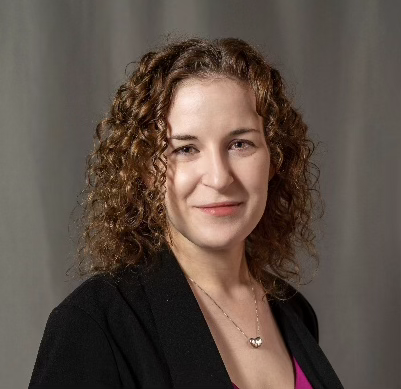
Elizabeth Ryder is an Assistant Director on NCQA’s Product Management team. In this role, she acts as a subject matter expert for NCQA’s Health Equity Accreditation programs and leads a cross-functional team tasked with pursuing new opportunities for NCQA’s standards-based programs to help health care organizations continuously improve the way they identify and address health inequities.

Polina Lissin, a Senior Healthcare Analyst at NCQA, brings together qualitative and quantitative methods to strengthen the way quality is measured and applied. She leads content development across measurement projects, including environmental scans, testing reports, public comment materials and measure specs. Before joining NCQA, Polina worked on public health policy at HUD and taught public health at Boston University. Her work has appeared in publications such as Gates Open Research, Health Affairs Scholar and Healthcare Business Today.
Episode Description
This episode of Quality Matters features Rupa Valdez, Professor at the University of Virginia; Polina Lissin, NCQA Senior Healthcare Analyst; and Elizabeth Ryder, NCQA Assistant Director of Product Management.
Together, they unpack the meaning of disability in health care, the importance of self-identification and how NCQA is working to improve outcomes for people with disabilities. The conversation bridges academic, policy and real-life perspectives, making a compelling case for why disability is central to quality improvement.
Listen to learn about:
- Disability and Destiny: One in four Americans has a disability. That prevalence understates everyone who will have a disability.
- Defining and Measuring Disability: Policymakers and disability advocates agree that people with disabilities should define their own disability status. Measures of population health and quality must adjust accordingly.
- NCQA’s Contributions and Innovations: New standards for Health Outcomes Accreditation and the Disability Description of Membership measure in HEDIS 2026 show disability can be a valuable lens for assessing quality.
- Designing for Inclusion: From curb cuts in sidewalks to adjustable exam tables, accessibility is a design principle that improves life for everyone—not just those who identify as disabled.
This episode is an essential resource for quality advocates, policymakers, accreditation professionals and others committed to improving care for all. It underscores that disability is not a niche issue but something that affects nearly all of us, eventually. By accounting for disability, health care can be better and more accessible for everyone.
Different people identify with different terms that underlie that same need for accommodation and access. Someone may consider themselves disabled but not have that same limitation—because of technology, the way the physical space has been built or laid out—may not actually experience that functional limitation.
So wording needs to be broad and encompassing to capture the range of experiences within the disability community.
Timestamps
(01:46) Understanding Disability in Health Care
(03:40) Challenges in Measuring Disability Care
(07:30) Addressing Ableist Bias
(12:29) Building Better Standards and Measures for Disability Care
(18:52) Tips on Improving Care for People with Disabilities