What’s New and What’s Next for Primary Care
For years, primary care has been at the heart of quality improvement.
But with so much changing in healthcare, how should primary care evolve?
Listen On:
About The Guests

Karen is an accomplished leader with experience that spans traditional healthcare boundaries, having worked with employers, plans, providers and health systems over her 30+ year career. Understanding each of these unique perspectives fuels her work as a translator, bridge-builder and change agent.
Her longstanding personal mission is to make healthcare work better for more people at a cost they can afford. Ensuring that primary care is adequately funded, appropriately evaluated and connected to the broader healthcare ecosystem in a patient-centered manner has been the central focus of these efforts for many years.
In her role at the American Academy of Family Physicians, Karen’s teams include the Center for Payment Innovation focused on moving primary care payment toward appropriately funded, prospective models and the Center for Career and Practice with the mission of equipping family physicians to enjoy successful careers in a variety of practice settings and roles.
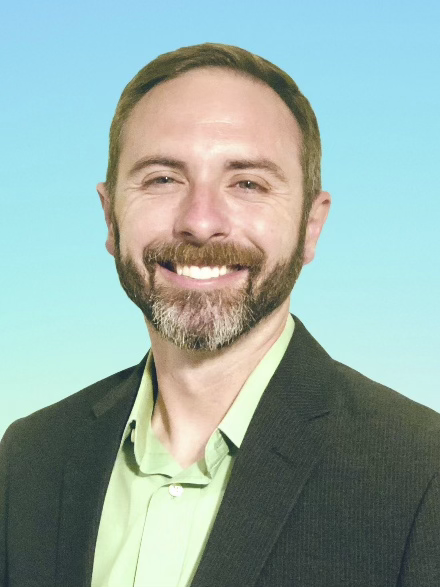
Jeff Sitko serves as Associate Vice President of Product Management at NCQA, where he leads strategy and development for Care Delivery solutions that advance quality, equity and value-based care. In this role, he oversees product innovation, lifecycle management and partnerships that support digital quality measurement and practice transformation.
With more than a decade of experience in healthcare, Jeff previously held leadership positions at AmeriHealth Caritas and MedAllies, driving initiatives in payer-provider collaboration and value-based care. His expertise spans care coordination, performance improvement and technology-enabled solutions that help organizations deliver better outcomes across the healthcare ecosystem.
Episode Description
This episode of Quality Matters examines primary care’s evolving role, and features Karen Johnson of the American Academy of Family Physicians and Jeff Sitko of NCQA.
Karen and Jeff outline primary care’s distinguishing focus on patient relationships, the strain on the primary care workforce and technology’s promise to ease burdens. The discussion connects the dots between workforce sustainability, AI-driven efficiency, payment reform and NCQA’s vision for next-generation primary care.
Karen highlights the underappreciated fact that only 5% of healthcare spending goes to primary care, despite public perception that the figure is or should be higher. Jeff describes a dawning era of proactive, data-driven care delivery. He also previews NCQA’s plans to build upon the successful Patient-Centered Medical Home model of primary care.
Highlights
- The Human Core of Primary Care: Continuity and trust are what make primary care special, even as practice settings change.
- Workforce Challenges and Opportunities: Clinicians report high stress and burnout, yet relationships with patients keep them engaged. Building systems that protect these relationships—and make primary care careers attractive—is critical to sustainability.
- Economics and Incentives: Guests discuss new payment models, state-level initiatives and federal efforts to rebalance incentives and resource primary care appropriately.
- Looking Ahead: The foundational Patient-Centered Medical Home model gets an update in 2026. Plus, Karen calls for a seismic shift to treat primary care as a common good.
This episode is essential listening for healthcare executives, policymakers and clinicians committed to strengthening primary care as the foundation of quality improvement.
I am paying attention to a population of patients. They’re mine. They’re on my panel. And now maybe they’re also tied to some accountability arrangement in value-based care where performance comes into play.
And so I’m going to be proactive for a lot of reasons. One, it’s the right thing to do for patients. But I also want to make sure my patients are getting preventive services they need, they are taking the medications I prescribe, they are going to the referral I recommended. And I’m getting the information back from that physician, and my team is acting on that. It’s all of those things that should be ubiquitous in primary care.
Timestamps
(01:07) The Changing Landscape of Primary Care
(06:42) Challenges in the Primary Care Workforce
(08:49) How Technology is Impacting Primary Care
(15:59) Future Directions and Innovations
(18:11) NCQA’s Plans for 2026