NCQA Tests Person-Centered Outcome Measures With D-SNP Plans
March 27, 2026 · NCQA Communications
NCQA has reached another milestone in the advancement of the person-centered outcome (PCO) measures: testing with Dual-Eligible Special Needs Plans (D-SNP). The results provide valuable insights for D-SNPs and C-SNPs (Chronic Condition Special Needs Plans) looking to incorporate the person-centered outcome approach into their workflows.
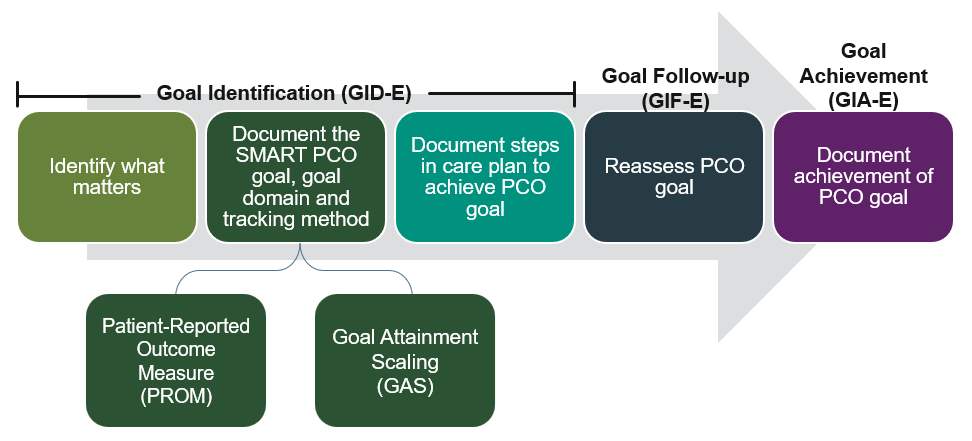
PCO measures work in tandem with clinical care to help people living with complex health needs make progress toward a health goal that matters to them. PCO measures have three components:
- Identify a goal and document it in a structured way, using goal attainment scaling or a patient-reported outcome measure.
- Follow up on the goal.
- Assess achievement of the goal.
Clinicians across the care continuum and in community-based services can use this approach to identify what’s important to a person and support age-friendly care. Defining a person’s goals—and ensuring that their care is consistent with those goals—can reduce unwanted treatment, improve patient activation and lead to meaningful improvement.
Why It Matters
NCQA is currently moving the PCO measures for C-SNPs and D-SNPs through the HEDIS® approval process, with the goal of incorporating the measures in Measurement Year (MY) 2027. We are beginning with special needs plans because they have an existing practice to build on—they already include goal documentation as part of their care models. Plus, the Centers for Medicare & Medicaid Services (CMS) issued a new rule in August 2025 that requires goals to be person-centered and for care teams to follow up on the goals, which aligns with PCO measures.
“In the past ten years, NCQA has tested the PCO measures with over 30,000 patients and over 750 clinicians in a variety of care settings across 17 states,” says Daniela Lawton, NCQA’s Assistant Vice President of Quality Sciences Integration. “We’ve shown that clinicians are able to implement this approach and organizations are able to document and report the necessary data elements for the measures. We are excited to work toward incorporating the PCO measures into HEDIS.”
In Their Own Words: Partner Perspectives on PCO Measures
Our partners explain why they chose to participate in the D-SNP testing.
“Person-centered outcome measures are crucial for our membership as they empower members to take control of their health. This approach fosters better engagement and collaboration, ultimately leading to improved health outcomes. We volunteered for this testing process because our mission is to make a lasting difference in our members’ lives. Supporting our membership in developing their specific, member-driven goals and needs aligns perfectly with this mission. Through this testing, we have recognized that while members may fall within the same category, their individual needs can vary significantly. Generalized goals do not adequately address these unique needs. By focusing on member-driven and specific objectives, we can truly understand our members and provide the support they need to achieve their goals.”
Meghan Crane, MSW, LISW-S, CCM, Manager, Case Management, Integrated Care, CareSource
“Person-centered outcome measures represent a strategic evolution in how we define value and accountability in healthcare. For the D-SNP populations we serve, quality must extend beyond clinical indicators to reflect the goals, preferences and lived experiences that shape each member’s health journey. Our participation in NCQA’s testing initiative reflects our broader commitment to advancing a more integrated, person-centered model of care. By contributing insights from the communities we serve, we are helping shape the future of quality measurement while strengthening how person-centered principles are embedded across our long-term strategy, partnerships and performance framework.”
Dr. Christy Valentine Theard, President, Anthem Blue Cross and Blue Shield Medicaid, New York
“Person-centered outcome measures are especially important for the vulnerable populations we serve because they center care around what matters most to our members—their personal goals and lived experiences. Person-centered outcome goals help ensure we are supporting quality of life, independence and dignity.”
Esther Elefant RN, BSN, CRC, Director II of Health Care Management Services, Anthem Blue Cross and Blue Shield, New York
Lessons Learned from D-SNP Testing
NCQA evaluated PCO measures with two D-SNPs to assess whether goal conversations and documentation are feasible and can be integrated into existing SNP workflows. We provided technical assistance and reviewed data submissions to identify areas for improvement.
“Our testing confirms that the PCO measures are feasible, adaptable to diverse systems and capable of driving person-centered care,” says Lawton. “Goal identification had the highest compliance among D-SNPs. Performance rates for goal follow-up and goal achievement were lower, which is consistent with our past testing efforts.”
Here are some of the lessons learned that can help clinicians as they prepare to implement PCO measures:
- Focus on what matters to the person. A patient managing diabetes may be more motivated to feel well so they can attend a family event, rather than focusing solely on lab numbers. Ask probing questions to understand why the goal matters to them.
- Identify a specific task or activity. Singular goals give people a clear focus. Rather than “get more active,” a person with diabetes might choose walking as the specific activity they want to increase.
- Set a realistic time frame. All goals should be timebound. For example, walking 10–14 minutes daily for the next two months is more actionable than an open-ended commitment to move more.
- Don’t expect perfection. Build wiggle room into the patient’s goal, so a missed day doesn’t mean failure. Adding “on average” can also help it feel less daunting. For example, setting a goal to walk 10 minutes daily, on average, over two months leaves wiggle room for a 5-minute or a 15-minute daily walk—giving the patient options without derailing progress.
- Document all follow up discussions. Goal progress should be documented at every visit—even when the patient hasn’t advanced. During testing, we discovered that some clinicians were not documenting the follow-up conversation if the patient did not make enough progress toward their goal. If progress is stalling, check in: Is the goal still realistic? Use that conversation, not just the outcome, as the clinical record.
What’s Next
NCQA recently completed a public comment period for HEDIS MY 2027, which included a recommendation to add PCO measures for D-SNPs and C-SNPs. Institutional SNPs are not included. Next, the recommendation will move through NCQA’s committee process for consideration and approval.
We also see movement toward digitalization of goal-directed care through Health Level Seven (HL7®), which presents opportunities to standardize the documentation required for the PCO measures. NCQA is participating in the HL7 Patient Care Work Group and co-developed the Person-Centered Outcome Implementation Guide (IG). The IG defines the standards for transmission of data in an interoperable format, such as Fast Interoperability Healthcare Resources (FHIR®). It includes the steps to document goal-directed care, such as recording a goal, using goal attainment scaling or patient-reported outcome measures to track goals over time and goal follow-up. The IG should be released in the spring.
Learn More
The graphic below provides a high-level overview of PCO measures and how they work. Visit our resource page to learn more about PCO measures and how to implement them in your organization.
Acknowledgements
NCQA developed person-centered outcome measures with support from The John A. Hartford Foundation, The SCAN Foundation and the Gordon and Betty Moore Foundation.
HEDIS® is a registered trademark of the National Committee for Quality Assurance (NCQA).
HL7® and FHIR® are the registered trademarks of Health Level Seven International and their use does not constitute endorsement by HL7.